A voice assistant that calls the airline's call center to claim a no-show refund. A dashboard with agents that run unattended every day. Extensions the team uses on the airline's website. I built all of it solo, with Claude Code, after two years on the front line issuing flight tickets.
9,067 commits across 25 repositories, March to November 2026, counted on GitHub.
Getting a no-show boarding fee back means calling Azul's call center, getting through the IVR and waiting on hold. On one Sunday I measured, the wait came close to an hour. The Domus call center walks that path and lets the team follow every call live.
The holder's and ticket's details come from the no-show queue before dialing, so the conversation never depends on memory.
The system presses the keys on Azul's IVR and recognizes when a human agent comes on the line.
Measured on real callsShe follows a step-by-step script to the protocol number: booking code, cancellation, fee amount and refund method.
Tested with a simulated agentBoth sides are recorded separately, the transcript appears seconds after each line with ID and card numbers masked, and whoever is monitoring gets an alert when the agent's voice stops coming through.
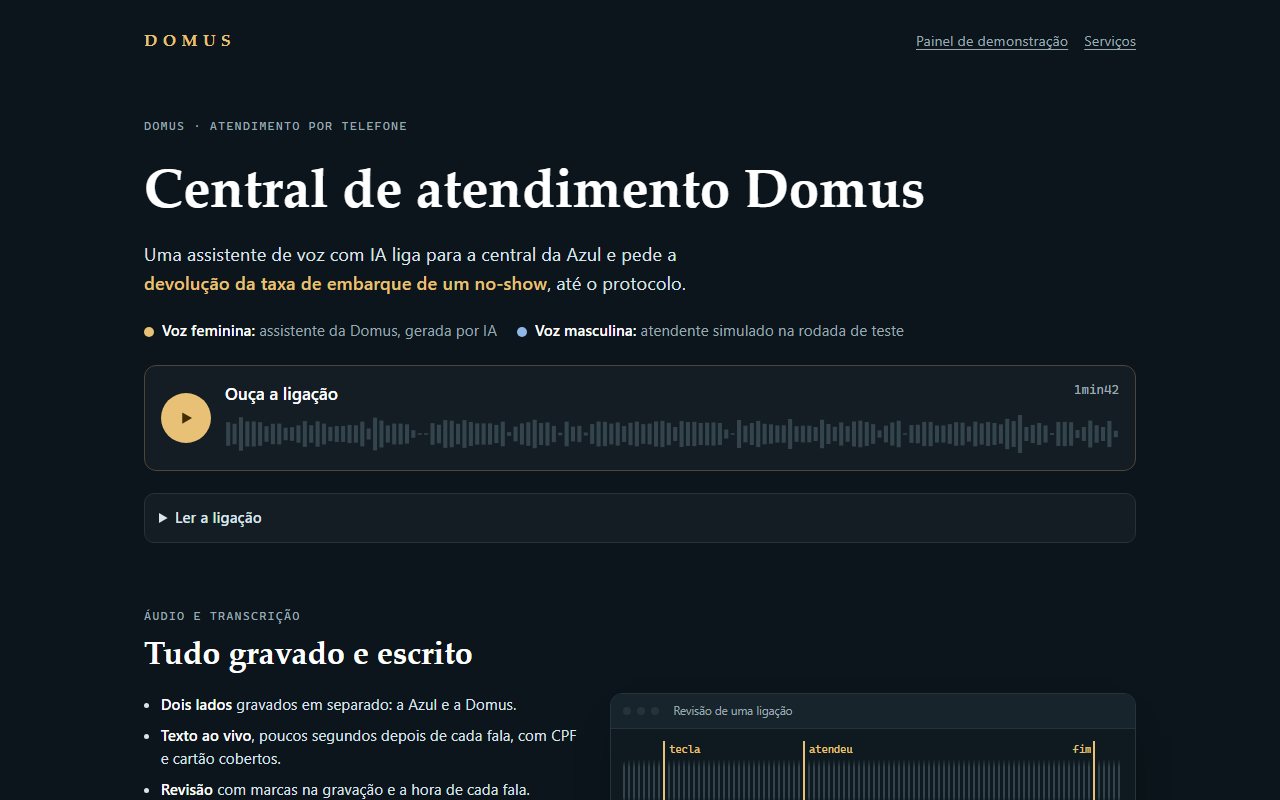
Test round with fictitious data: the booking, flight and protocol are not real.
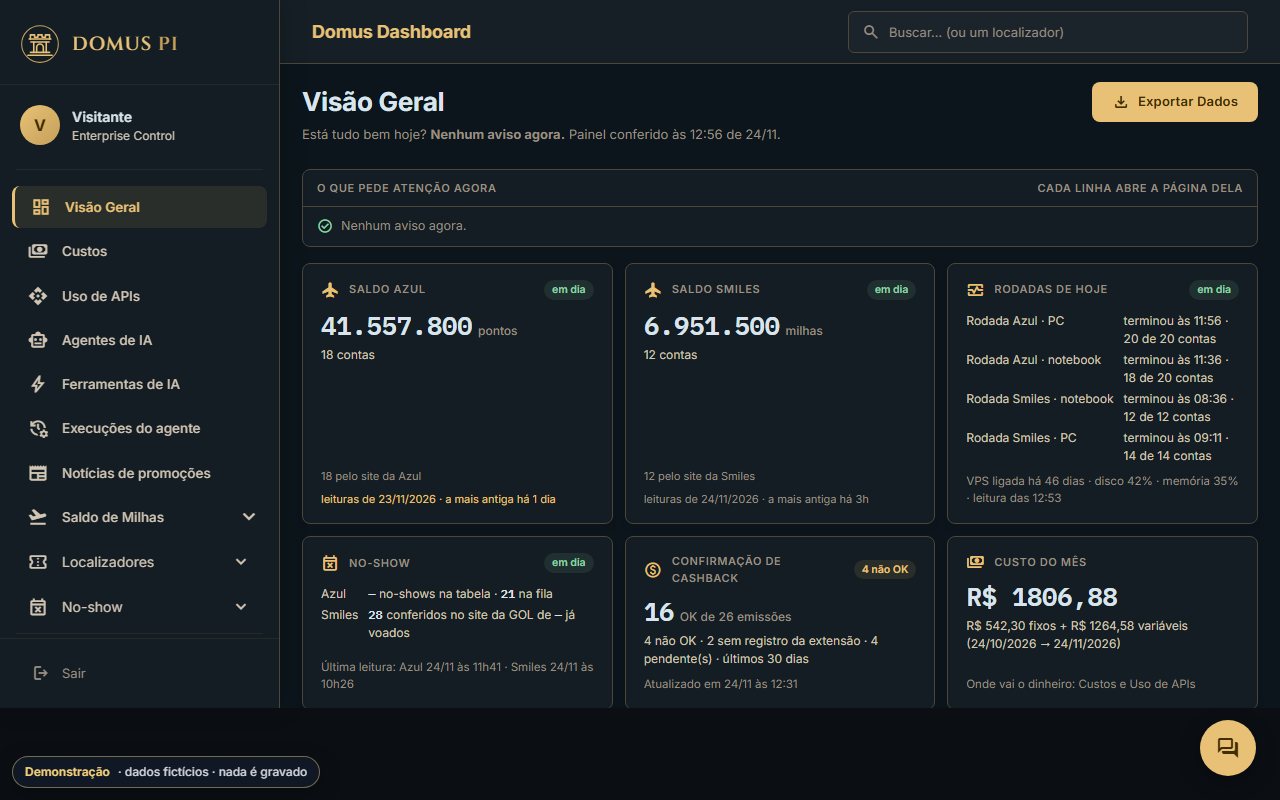
A production dashboard holding the real miles balance of every account, the cost of every API and the state of the agents that run unattended every day. Around it, 13 projects: balance and statement reading across loyalty programs, ticket reconciliation, no-show alerts, automatic promo enrollment, the call center, the team's extension and WhatsApp bots. The code is private.

The production dashboard, open to browse with fictitious data: miles balance per account, agent runs, no-shows, reconciliation, the cost of every API and server health.

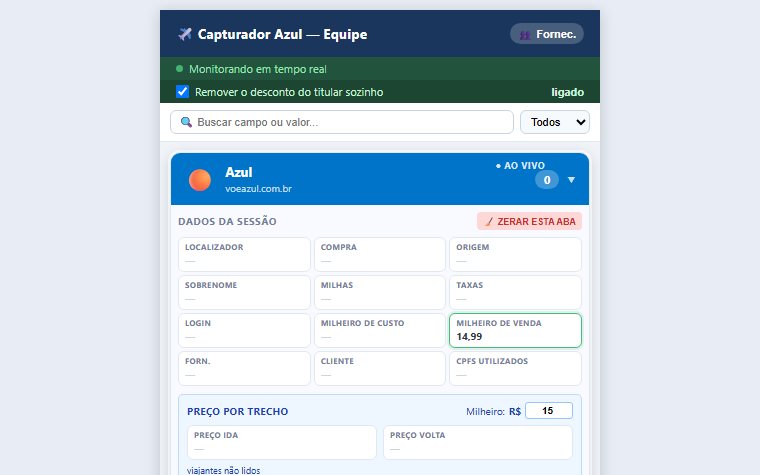
The ticketing team's extension on the Azul website: it shows each person's account group, records points and fees from every search and prices each leg and the Points + Cash fare. Passwords and cards never reach it.

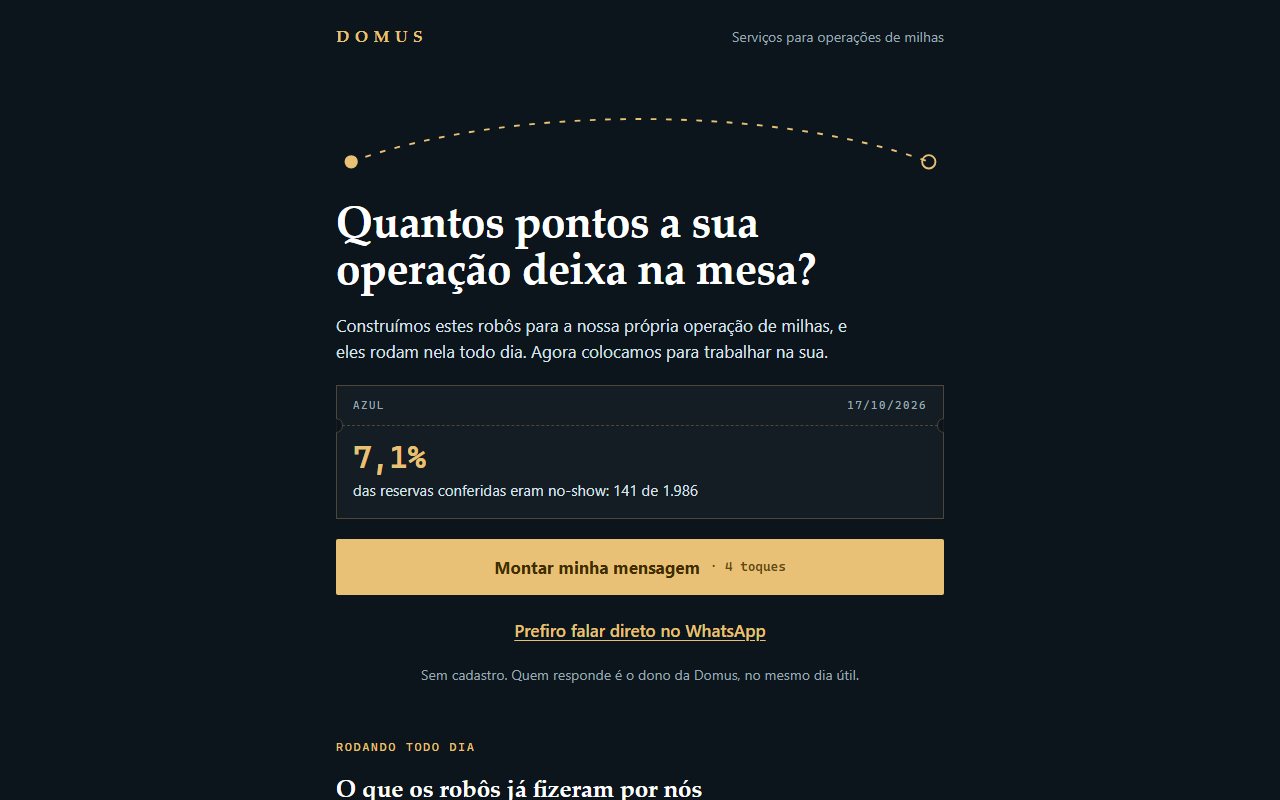
The page that offers other agencies the robots that run every day in Domus's own operation: promotions, idle points, ticket reconciliation and no-shows.
Counted from the git history of the ecosystem's 14 repositories.
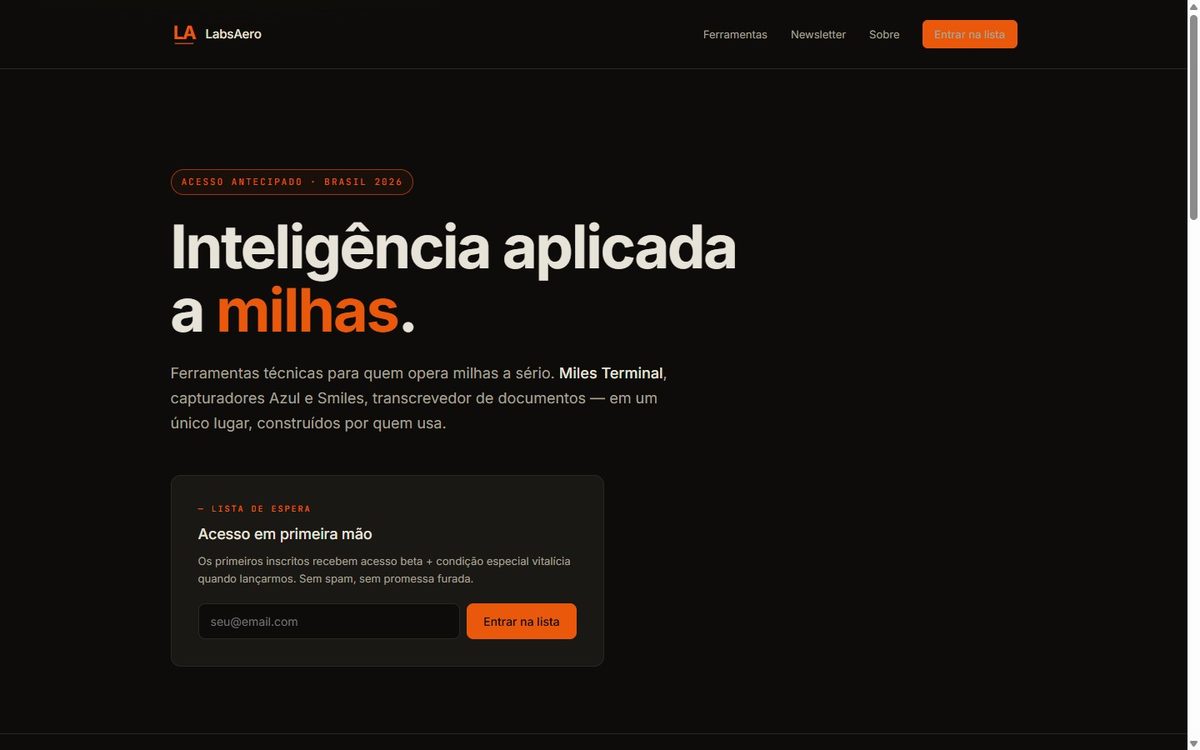
Before Domus, I started with my own desk: a web terminal for the operation and extensions that take repetitive work off the ticketing agent.

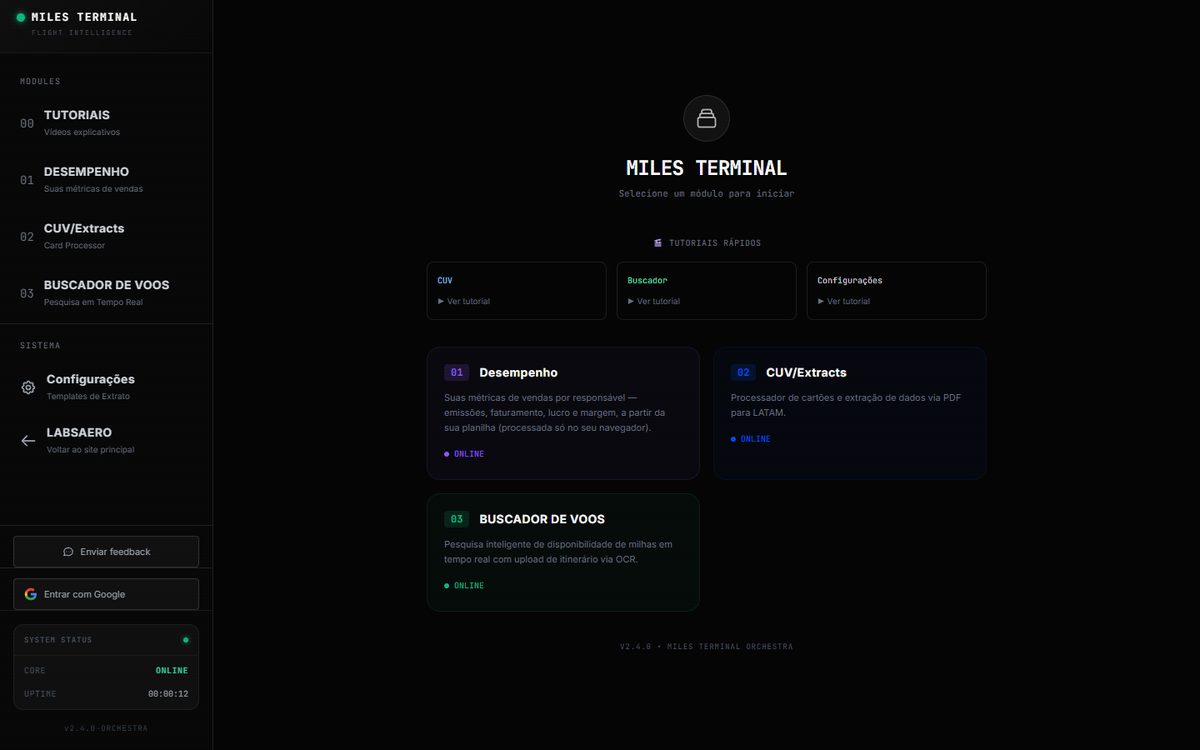
A web terminal for miles operations: it processes LATAM cards and statements, shows each agent's performance from the sales spreadsheet and builds a flight search from a screenshot, read by AI.

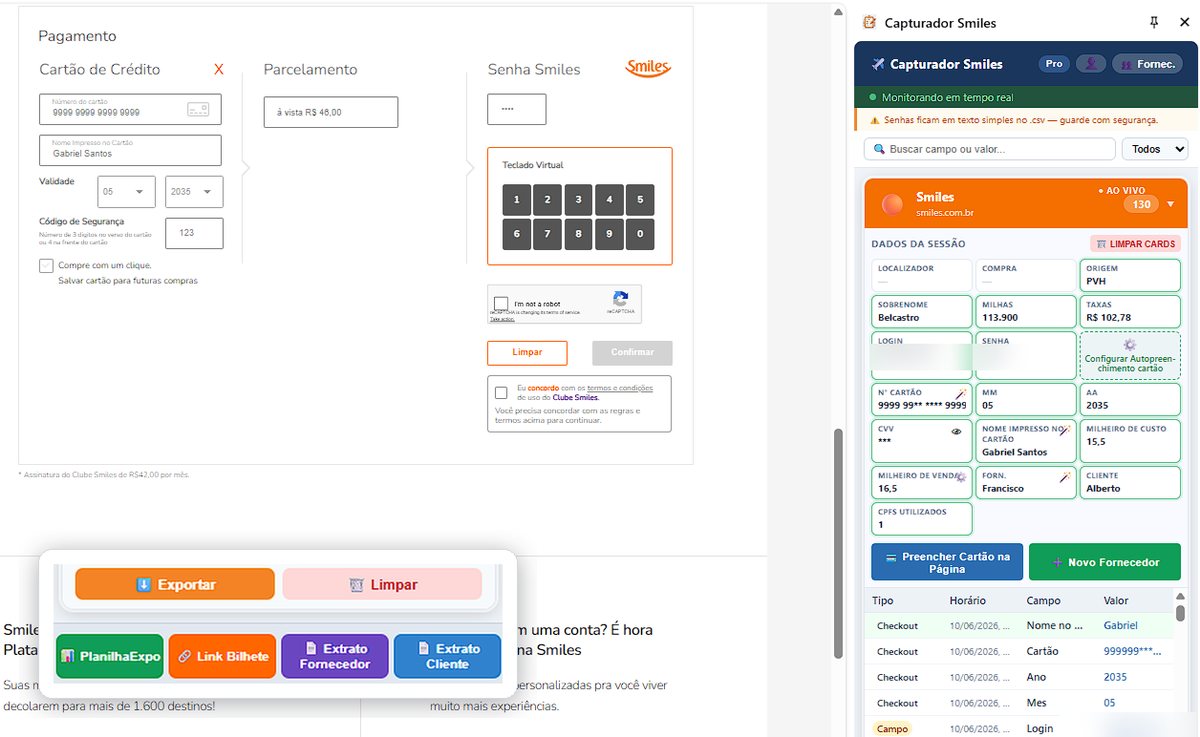
A Chrome Web Store extension that captures the statement and fills in the booking on the Smiles website. It started as a SaaS, with login, subscription and an in-browser encrypted password vault. Today it is an internal tool for one agency, with allow-list access.

The brand's website, with the tools, the blog and the miles bulletin.
Reads ticket photos on WhatsApp with AI and organizes everything in a spreadsheet.
Extracts data from IDs, driver's licenses and passports automatically with AI.
Travel website with direct WhatsApp quoting.
Website for a travel agency.
Other bots, websites and tools are on GitHub ↗
I'm from Rio de Janeiro. I spent about two years at a high-volume miles desk, issuing tickets and training colleagues on my way to a senior role. That's where I learned where time gets lost: on the phone, in statements that don't reconcile, in the same screen opened a hundred times.
I started building for my own job and cut the time per ticket in half. That led to Labs Aero and then to the Domus ecosystem, including the voice call center.
I work like a one-person company with AI as my team: Claude Code with MCPs (Playwright, Chrome, Supabase) to build, test and ship, with automated tests before each release.
Open to remote roles and projects in voice AI, agents and automation.